The Internal Tools Revolution
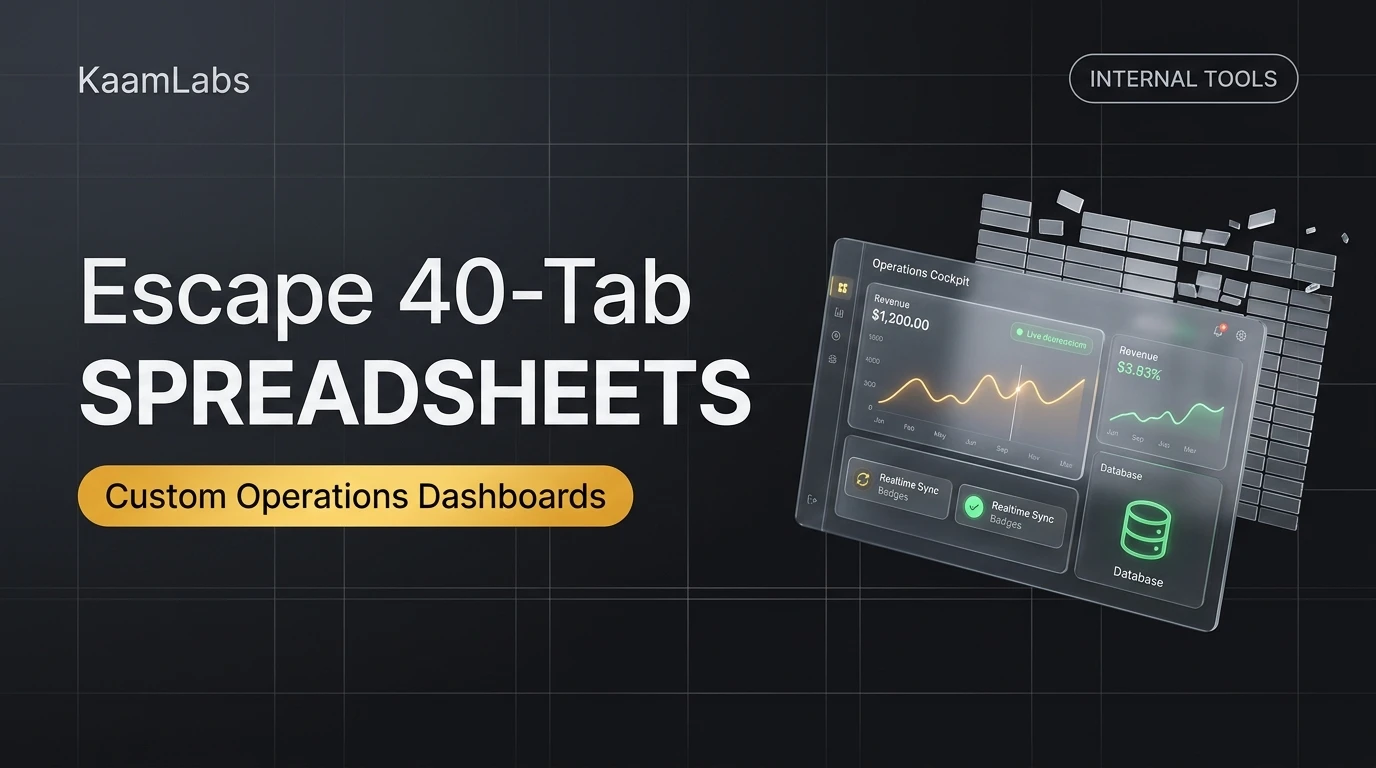
Indian mid-market companies run core logistics, payroll, and warehouse operations on fragile 40-tab Google Sheets that crash, leak data, and overwrite formulas. Discover how custom internal dashboards built with Next.js and Supabase provide secure, real-time command cockpits.
The Spreadsheet Breaking Point in Indian Mid-Market Enterprises
Architecture of a High-Velocity Next.js + Supabase Internal Tool
Rather than settling for clunky low-code platforms (Retool, Appsmith) that charge aggressive monthly seat taxes, forward-thinking Indian enterprises deploy custom, proprietary web cockpits:
┌────────────────────────────────────────────────────────┐
│               EXECUTIVE & OPS ROLE DASHBOARD           │
│   • measured Next.js Server Components               │
│   • TanStack Table with Virtualized 100k+ Row Support  │
│   • Role-Restricted Column & Data Views                │
│   • Granular Audit Logging (Who, What, When)           │
└───────────────────────────┬────────────────────────────┘
                            │ WebSockets / Realtime Postgres
                            ▼
┌────────────────────────────────────────────────────────┐
│               MANAGED POSTGRESQL (SUPABASE)            │
│   • Foreign Key & Check Constraints (Zero Bad Data)    │
│   • Row-Level Security (RLS) Enforced at Engine Level  │
│   • Automated Daily Point-in-Time Backups (PITR)       │
│   • Encrypted Webhooks to Tally, WhatsApp, Logistics   │
└────────────────────────────────────────────────────────┘
The 4 Pillars of Production Internal Tools
Comparison: Google Sheets vs. Low-Code vs. Custom Next.js Cockpit
Frequently Asked Questions
How long does it take to migrate an enterprise from Google Sheets to a custom dashboard?
At KaamLabs, a typical spreadsheet-to-cockpit migration takes 3 to 4 weeks. This includes database normalization in PostgreSQL, automated historical data migration scripts, frontend UI component configuration, and team onboarding.
Can staff access the internal operations dashboard from their smartphones?
Yes. Every custom internal dashboard engineered by KaamLabs is built with responsive Tailwind CSS design tokens and mobile-first thumb-zone architecture, allowing warehouse staff, delivery drivers, and field executives to log data directly from mobile devices.
Architectural Cross-References & Implementation Guides
To expand your technical implementation strategy, evaluate these companion engineering blueprints and core platform frameworks:
Put this into a project brief
Describe the user task, the current bottleneck, the systems involved and how you will measure a successful result. Ask for a scoped pilot and acceptance checks before expanding the implementation.
Discuss a website project or explore published client work.
Essential Takeaways & Clarifications
A typical spreadsheet-to-cockpit migration takes 3 to 4 weeks, including PostgreSQL schema design, automated data cleaning, and role-based UI configuration.
Use this guidance in context
Technical examples are starting points for a project review. Platform requirements change, and results depend on implementation and starting conditions. Refer to the linked documentation and test the actual workflow.
Send a correction with the page URL to hello@kaamlabs.in.
Consult the source for current requirements and the context of each referenced statement.
Explore delivery details, project examples and practical buying guidance.
Ready to Upgrade to Sub-Second Modern Architecture?
Eliminate development delays. Ship clean Next.js, FastAPI, or mobile systems with dedicated engineering and milestone-driven delivery.