Indian Mobile Checkout Friction Analysis
A practical guide to indian mobile checkout friction analysis, with decisions, implementation checks and limitations for business teams.
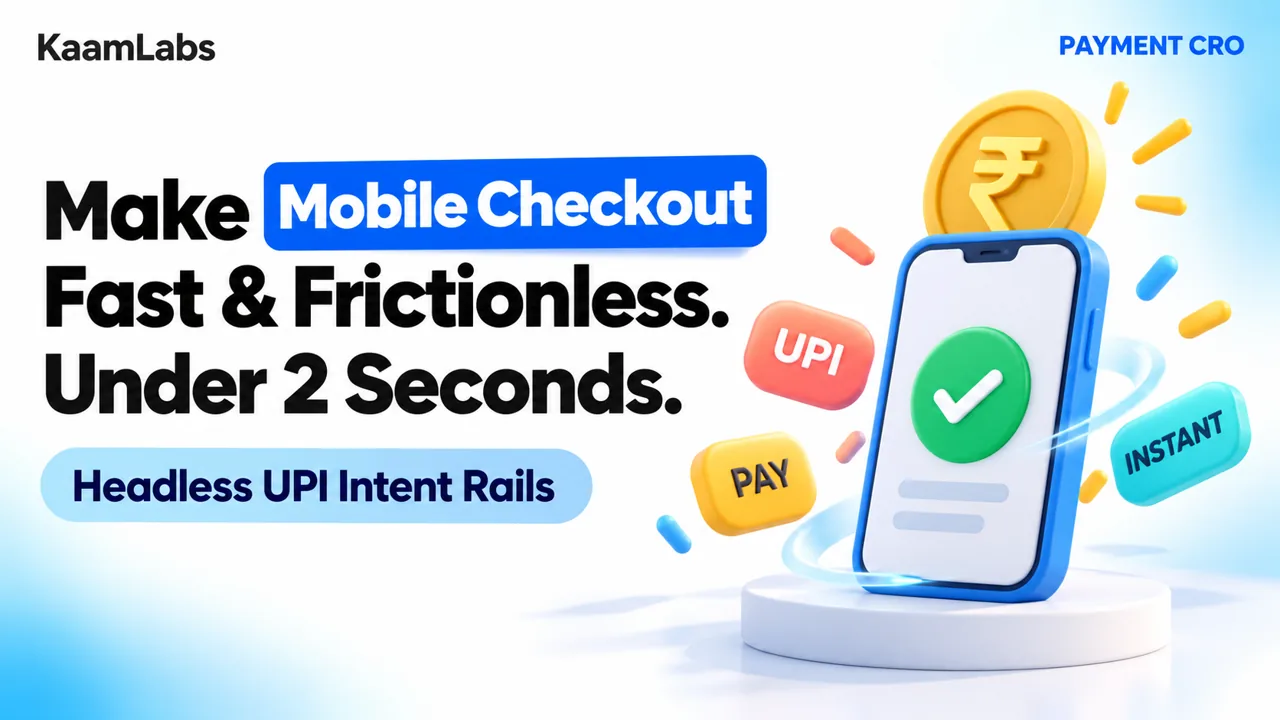
1. The Anatomy of Indian Mobile Checkout Drop-Off
2. The 3 Architectural Solutions for Zero-Friction Checkout
[ Traditional Checkout Funnel (High Drop-Off) ]
Cart ──▶ 10-Field Form ──▶ 3rd-Party Gateway Redirect ──▶ Manual VPA Entry ──▶ Timeout / Drop-off

[ KaamLabs Headless UPI Intent Architecture (34% Higher Conversion) ]
Cart ──▶ Auto-Filled WhatsApp Phone ──▶ Native UPI Intent Overlay ──▶ 1-Tap App Open ──▶ Instant Webhook Verify
1. Native UPI Intent Flow (Zero VPA Typing)
Instead of forcing the buyer to type their UPI ID (`user@okaxis`), invoke the mobile operating system's native UPI Intent URI scheme (`upi://pay?...`). This renders a native bottom sheet allowing the buyer to tap their preferred payment app directly, opening Google Pay, PhonePe, or Paytm instantly.
2. Embedded Headless Modal vs. Full-Page Redirect
Never redirect the user away from your domain. Deploy headless JavaScript SDKs that render the payment interface inside an embedded iframe modal, keeping your Next.js application state active in memory.
3. Automated Webhook Reconciliation
Do not rely exclusively on client-side frontend redirect callbacks to confirm transactions. Process payments asynchronously via secure server-to-server webhooks authenticated with HMAC-SHA256 signatures.
3. Production TypeScript: Headless Razorpay UPI Order Trigger
// app/api/checkout/razorpay/route.ts
import { NextResponse } from 'next/server';
import Razorpay from 'razorpay';

const razorpay = new Razorpay({
  key_id: process.env.RAZORPAY_KEY_ID!,
  key_secret: process.env.RAZORPAY_KEY_SECRET!,
});

export async function POST(req: Request) {
  const { amount, receipt, customerPhone } = await req.json();

  try {
    const order = await razorpay.orders.create({
      amount: amount * 100, // Amount in paise
      currency: 'INR',
      receipt: receipt,
      payment_capture: true,
      notes: {
        customer_phone: customerPhone,
      },
    });

    return NextResponse.json({ orderId: order.id, amount: order.amount });
  } catch (error: any) {
    return NextResponse.json({ error: error.message }, { status: 500 });
  }
}
4. Benchmark: Traditional Redirect vs. KaamLabs Headless Intent
5. Engineer High-Converting Checkout Systems with KaamLabs
Checkout optimization directly multiplies bottom-line revenue without spending more on customer acquisition.
Explore our engineering solutions:
Architectural Cross-References & Implementation Guides
To expand your technical implementation strategy, evaluate these companion engineering blueprints and core platform frameworks:
Put this into a project brief
Describe the user task, the current bottleneck, the systems involved and how you will measure a successful result. Ask for a scoped pilot and acceptance checks before expanding the implementation.
Discuss a website project or explore published client work.
Essential Takeaways & Clarifications
Multi-step card authentication, slow gateway redirects, and app-switching timeouts when opening external UPI apps.
Use this guidance in context
Technical examples are starting points for a project review. Platform requirements change, and results depend on implementation and starting conditions. Refer to the linked documentation and test the actual workflow.
Send a correction with the page URL to hello@kaamlabs.in.
Consult the source for current requirements and the context of each referenced statement.
Explore delivery details, project examples and practical buying guidance.
Ready to Upgrade to Sub-Second Modern Architecture?
Eliminate development delays. Ship clean Next.js, FastAPI, or mobile systems with dedicated engineering and milestone-driven delivery.
Related Engineering Deep-Dives
WhatsApp Abandoned Cart & Lead Recovery Engine
Growth & ConversionWhatsApp Abandoned Cart & Lead Recovery Engine

Interactive Product Tours vs. Static Lead Forms