The KaamLabs Engineering Manifesto
A practical guide to the kaamlabs engineering manifesto, with decisions, implementation checks and limitations for business teams.
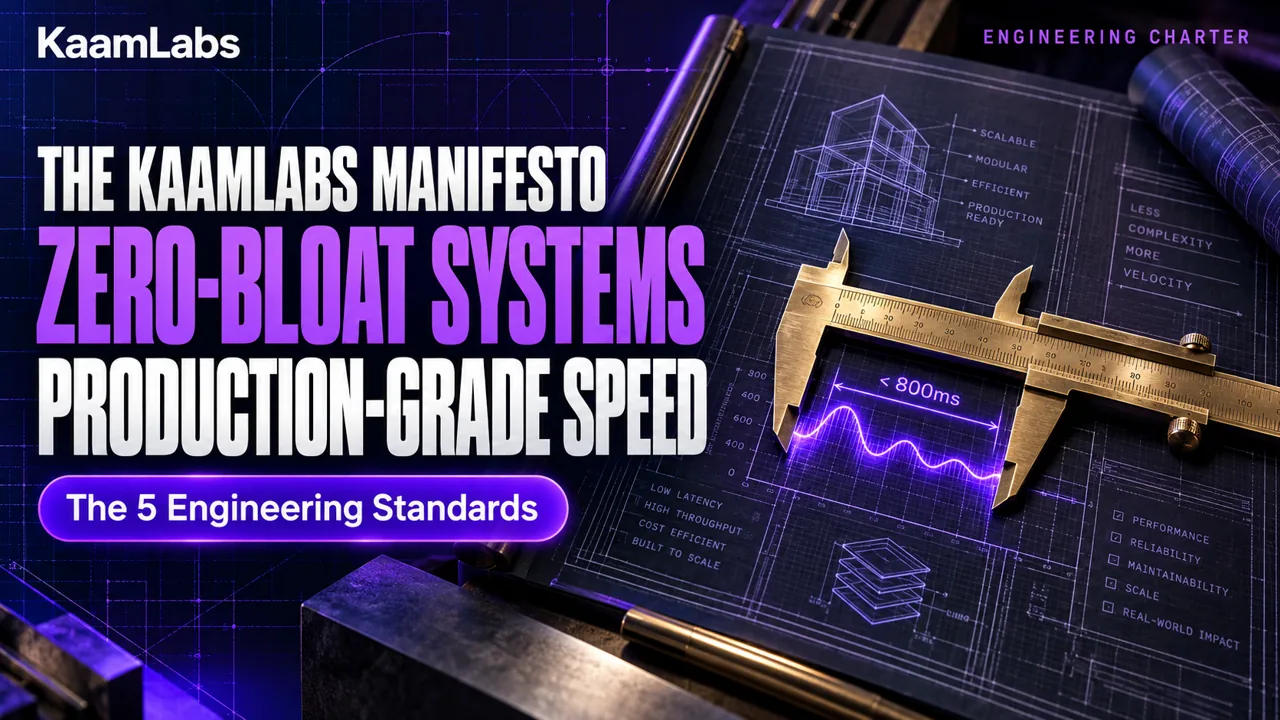
Direct Answer: The KaamLabs Engineering Manifesto is our foundational technical charter outlining how we design, develop, and deploy production software. Anchored by five non-negotiable standards—Zero-Runtime Bloat, measured Mobile Speed, Sovereign Local AI, Deterministic Fault-Tolerant Automation, and Full Client Code Ownership—it ensures that every system built by KaamLabs delivers enterprise stability and extreme performance.
Introduction: Addressing Common Inefficiencies in Enterprise Software
At KaamLabs, we reject these anti-patterns. This manifesto codifies the engineering discipline that governs every line of code committed across our projects.
The 5 Non-Negotiable Standards of KaamLabs Engineering
┌────────────────────────────────────────────────────────────────────────┐
│                      THE KAAMLABS ENGINEERING CHARTER                  │
├────────────────────────────────────────────────────────────────────────┤
│ 1. ZERO-RUNTIME BLOAT         │ Eliminate unnecessary JS libraries     │
│ 2. measured MOBILE SPEED    │ Sub-800ms FCP on Indian 4G/5G networks │
│ 3. SOVEREIGN AI & PRIVACY     │ Private LLM hosting behind firewalls   │
│ 4. DETERMINISTIC AUTOMATION   │ Idempotent webhooks, zero silent drops │
│ 5. BALANCE SHEET CODE MOAT    │ Client owns 100% of IP and data        │
└────────────────────────────────────────────────────────────────────────┘
Standard 1: Zero-Runtime Bloat
We believe that every kilobyte of code shipped to production must justify its existence.
Standard 4: Deterministic, Fault-Tolerant Automation
In business operations, an automation failure is not a minor inconvenience—it is an unsent invoice, an untracked truck dispatch, or an unrouted customer lead.
The Technology Matrix We Swear By
Conclusion
Great software is not measured by the number of slides in a kickoff deck or the buzzwords used in the boardroom. It is measured by the speed at which it loads, the stability with which it executes, and the profit it deposits into our clients' bank accounts.
That is the standard of KaamLabs engineering.
Architectural Cross-References & Implementation Guides
To expand your technical implementation strategy, evaluate these companion engineering blueprints and core platform frameworks:
Put this into a project brief
Describe the user task, the current bottleneck, the systems involved and how you will measure a successful result. Ask for a scoped pilot and acceptance checks before expanding the implementation.
Discuss a website project or explore published client work.
Essential Takeaways & Clarifications
Excessive dependencies introduce security vulnerabilities, slow load times, and maintenance liabilities. We prioritize native TypeScript and Python implementations.
Use this guidance in context
Technical examples are starting points for a project review. Platform requirements change, and results depend on implementation and starting conditions. Refer to the linked documentation and test the actual workflow.
Send a correction with the page URL to hello@kaamlabs.in.
Consult the source for current requirements and the context of each referenced statement.
Explore delivery details, project examples and practical buying guidance.
Ready to Upgrade to Sub-Second Modern Architecture?
Eliminate development delays. Ship clean Next.js, FastAPI, or mobile systems with dedicated engineering and milestone-driven delivery.