Model Context Protocol (MCP) in Production
Connect LLM agents securely to internal PostgreSQL databases, Tally ERP, and Zoho CRM with the Model Context Protocol (MCP). Discover FastMCP architecture, JSON-RPC 2.0 communication, and production security sandboxing.
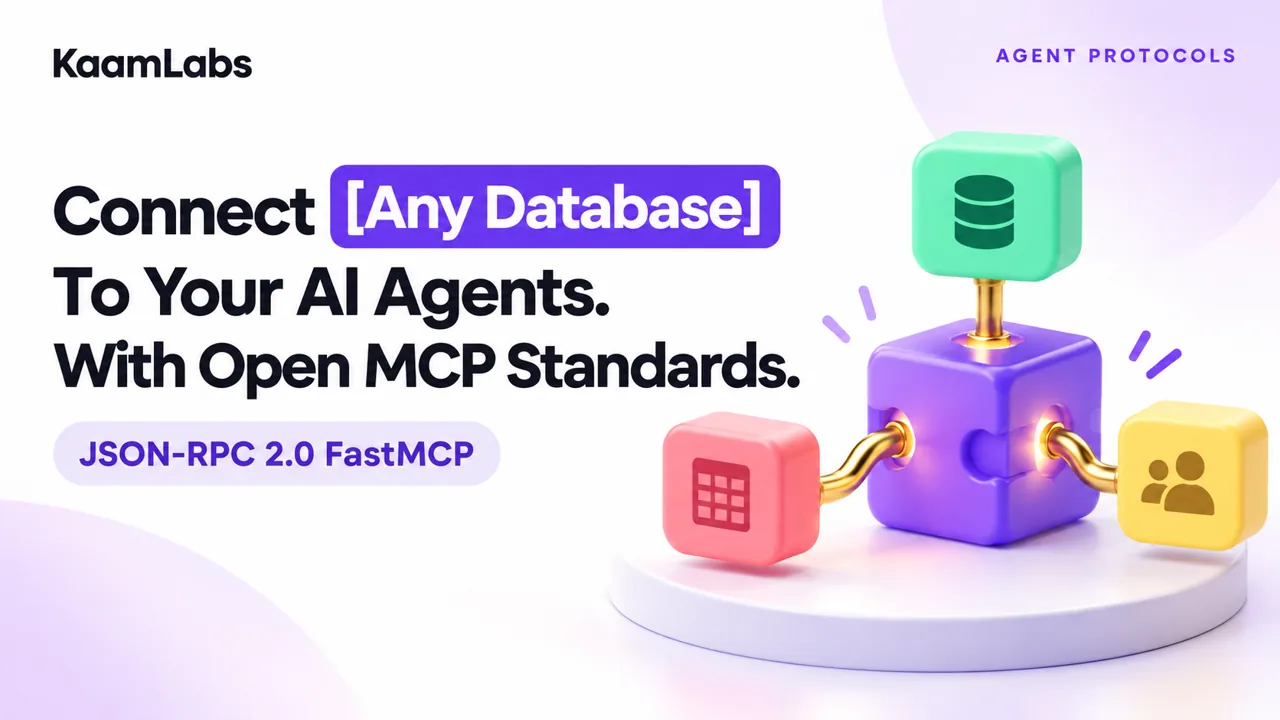
Direct Answer: The Model Context Protocol (MCP) provides a standardized, open-standard architecture for safely connecting Large Language Models to live enterprise data sources—including PostgreSQL databases, Tally ERP, Zoho CRM, and internal REST APIs. Rather than writing brittle custom glue code or leaking complete database credentials to AI chat interfaces, MCP servers expose secure tools, resources, and prompt templates over JSON-RPC 2.0 with granular permission boundaries, allowing autonomous AI agents to query stock levels, generate GST invoices, and update pipeline deals securely in real time.
1. The Integration Problem: From Brittle Glue Code to Open Standards
Before the introduction of the Model Context Protocol (MCP), connecting AI models to enterprise databases required writing ad-hoc API wrappers for every individual LLM provider:
MCP replaces point-to-point spaghetti code with a clean Client-Server Architecture modeled after the Language Server Protocol (LSP).
2. Production MCP Architecture: The Enterprise Hub
[ AI Host Agent (Claude Desktop / Custom Antigravity Studio) ]
                           │
                           ▼ (JSON-RPC 2.0 over Stdio / SSE)
[ KaamLabs Enterprise FastMCP Server ]
  • Dynamic Tool Registry & Role-Based Access Control (RBAC)
  • PII Masking & DPDP Act Data Scrubbing
  • Read-Only Connection Pooling via pgBouncer
                           │
        ┌──────────────────┼──────────────────┐
        │                  │                  │
        ▼                  ▼                  ▼
[ PostgreSQL / Supabase ]  [ Tally ERP XML ]  [ Zoho / HubSpot CRM ]
• Read customer history    • Live inventory   • Update deal stages
• Vector semantic search   • GST tax entries  • Log call transcripts
3. Production FastMCP Python Implementation Pattern
# mcp_server/enterprise_erp.py
from mcp.server.fastmcp import FastMCP
import httpx
import os

mcp = FastMCP("KaamLabs Enterprise ERP Gateway")

@mcp.tool()
async def query_warehouse_inventory(sku_code: str) -> dict:
    '''Fetch live stock levels and warehouse bin location for an enterprise SKU.'''
    # Connect securely to internal Tally / ERP database
    async with httpx.AsyncClient() as client:
        res = await client.get(f"https://erp.internal.kaamlabs.in/inventory/{sku_code}", headers={
            "X-Internal-Token": os.getenv("ERP_INTERNAL_KEY")
        })
        return res.json()

@mcp.tool()
async def schedule_production_dispatch(order_id: str, priority_level: str) -> str:
    '''Safely mark an order for expedited warehouse dispatch.'''
    # Enforce strict validation before executing write operations
    if priority_level not in ["standard", "urgent", "same_day"]:
        return "Invalid priority level."

    return f"Order {order_id} successfully queued for {priority_level} dispatch."

if __name__ == "__main__":
    mcp.run()
4. MCP Security & Governance Guardrails
5. Build Enterprise MCP Infrastructure with KaamLabs
Connecting AI agents to your mission-critical ERPs and databases requires rigorous security, fault tolerance, and software engineering.
Explore our engineering solutions:
Architectural Cross-References & Implementation Guides
To expand your technical implementation strategy, evaluate these companion engineering blueprints and core platform frameworks:
Put this into a project brief
Describe the user task, the current bottleneck, the systems involved and how you will measure a successful result. Ask for a scoped pilot and acceptance checks before expanding the implementation.
Discuss a website project or explore published client work.
Essential Takeaways & Clarifications
An open protocol that lets AI assistants and agents securely interact with external tools, APIs, and data sources over JSON-RPC 2.0.
Use this guidance in context
Technical examples are starting points for a project review. Platform requirements change, and results depend on implementation and starting conditions. Refer to the linked documentation and test the actual workflow.
Send a correction with the page URL to hello@kaamlabs.in.
Consult the source for current requirements and the context of each referenced statement.
Explore delivery details, project examples and practical buying guidance.
Ready to Upgrade to Sub-Second Modern Architecture?
Eliminate development delays. Ship clean Next.js, FastAPI, or mobile systems with dedicated engineering and milestone-driven delivery.