Google AI Overviews Optimization
A practical guide to google ai overviews optimization, with decisions, implementation checks and limitations for business teams.
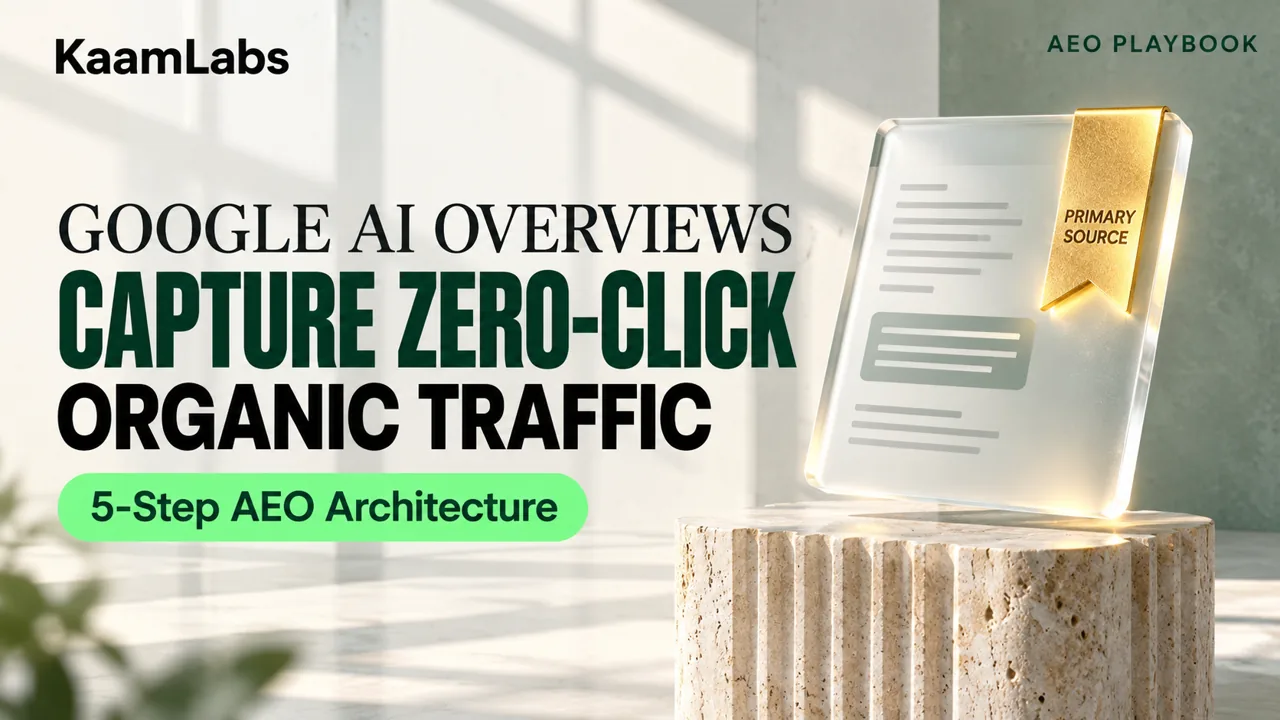
Google AI Overviews: The Zero-Click Search Reality
Google's search interface in India has experienced its most profound transformation in history. When business decision-makers query commercial problems:
*"What is the difference between custom software development and off-the-shelf SaaS in India?"*
Google no longer presents the organic #1 search result above the fold. Instead, a multi-paragraph Google AI Overview appears first, summarizing the answer with inline source tags and expandable citation cards.
How Google's AI Overview Algorithm Selects Citation Sources
Google's Gemini-powered retrieval pipeline evaluates web pages based on three algorithmic filters:
| Ranking Metric | Traditional Google Snippet | Google AI Overview (AEO) |
|---|---|---|
| Max Extraction Length | 160 Characters | 2 to 4 Full Paragraphs + Comparative Matrix |
| Source Diversity | 1 Single Domain | 3 to 6 Corroborated Source Citations |
| Formatting Preference | Clean meta description | Markdown Tables, Numbered Step Sequences |
| Traffic Quality | Broad click traffic | High-intent qualified researchers |
The 5-Step AEO Optimization Playbook
Step 1: The Inverted Pyramid Lead Paragraph
Open every commercial article with a direct, comprehensive answer in exactly 45 to 55 words. State the core concept, who it applies to, and the tangible outcome. Google AI Overviews routinely pull this exact block into the opening sentence of the generated overview.
Step 2: Implement High-Density Comparison Tables
Google AI Overviews love structured tables because LLMs can parse markdown grid rows deterministically. Always include a 5-column comparative matrix contrasting key features, costs, deployment timelines, and tradeoffs.
Step 4: Add Conversational Schema FAQ Blocks
Use valid `FAQPage` schema answering the top 3 follow-up questions users ask. Structure answers in natural conversational language.
Step 5: Secure Authoritative Knowledge Graph Entities
Ensure your company has a verified Google Business Profile, consistent MCA legal naming, and structured Organization schema connecting all digital properties.
Architectural Cross-References & Implementation Guides
To expand your technical implementation strategy, evaluate these companion engineering blueprints and core platform frameworks:
Put this into a project brief
Describe the user task, the current bottleneck, the systems involved and how you will measure a successful result. Ask for a scoped pilot and acceptance checks before expanding the implementation.
Discuss a website project or explore published client work.
Essential Takeaways & Clarifications
Place a 45-to-60 word Direct Answer block immediately following the H1 or target H2, accompanied by structured Markdown comparison tables and clean JSON-LD Schema markup.
Use this guidance in context
Technical examples are starting points for a project review. Platform requirements change, and results depend on implementation and starting conditions. Refer to the linked documentation and test the actual workflow.
Send a correction with the page URL to hello@kaamlabs.in.
Consult the source for current requirements and the context of each referenced statement.
Explore delivery details, project examples and practical buying guidance.
Ready to Upgrade to Sub-Second Modern Architecture?
Eliminate development delays. Ship clean Next.js, FastAPI, or mobile systems with dedicated engineering and milestone-driven delivery.