DevOps for Growing Indian Startups
A practical guide to devops for growing indian startups, with decisions, implementation checks and limitations for business teams.
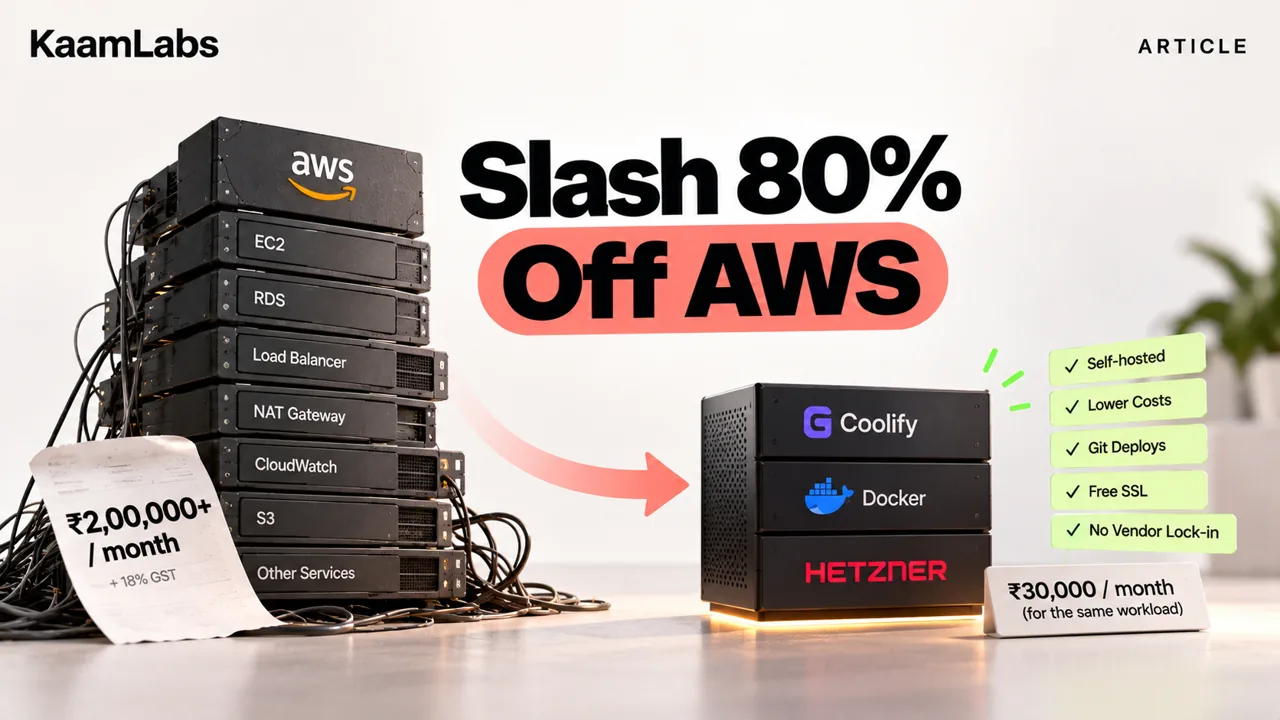
1. The AWS "Bill Shock" Anatomy in Indian Startups
┌────────────────────────────────────────────────────────┐
│             Where Does Your AWS Money Go?              │
├────────────────────────────────────────────────────────┤
│ • 2x Managed NAT Gateways (Idle):        ₹7,200 / mo   │
│ • 3x Application Load Balancers:         ₹6,500 / mo   │
│ • RDS PostgreSQL (db.m6g.large):        ₹28,500 / mo   │
│ • Inter-AZ Data Transfer Egress:        ₹14,200 / mo   │
│ • Over-provisioned EC2 compute:         ₹65,000 / mo   │
│ • CloudWatch Logs & Metrics Ingestion:   ₹8,900 / mo   │
│ • 18% Indian GST:                       ₹23,454 / mo   │
├────────────────────────────────────────────────────────┤
│ TOTAL MONTHLY AWS DRAIN:               ₹1,53,754 / mo  │
└────────────────────────────────────────────────────────┘
2. Enter Coolify: The Self-Hosted Cloud Revolution
For years, developers accepted high AWS bills because managing raw Linux servers with Docker and Nginx manually was complex and risky.
At KaamLabs, we migrate high-growth Indian startups from fragmented AWS sprawl to a streamlined, resilient container infrastructure:
                          ┌───────────────────────────────┐
                          │   Cloudflare Edge (Free WAF)  │
                          │   • DDoS Protection & SSL     │
                          │   • Global CDN Caching        │
                          └───────────────┬───────────────┘
                                          │
                                          ▼ (Port 443 / WireGuard)
┌─────────────────────────────────────────────────────────────────────────┐
│               Dedicated High-Performance Server Cluster                 │
│                 (64GB RAM / 16 Dedicated AMD vCPUs)                     │
│                                                                         │
│  ┌───────────────────────────────────────────────────────────────────┐  │
│  │                     Traefik Reverse Proxy                         │  │
│  │            (Zero-Downtime Blue/Green Dynamic Routing)             │  │
│  └───────┬───────────────────┬───────────────────┬───────────────────┘  │
│          │                   │                   │                      │
│          ▼                   ▼                   ▼                      │
│  ┌───────────────┐   ┌───────────────┐   ┌───────────────┐              │
│  │ Next.js App   │   │ FastAPI Worker│   │ Redis / BullMQ│              │
│  │ (Container A) │   │ (Container B) │   │ (Container C) │              │
│  └───────────────┘   └───────────────┘   └───────────────┘              │
│          │                                                              │
│          ▼                                                              │
│  ┌───────────────────────────────────────────────┐                      │
│  │   PostgreSQL 16 + pgvector (Container D)      │                      │
│  │   • NVMe Direct Disk I/O (Sub-1ms Writes)     │                      │
│  │   • Automated Daily Encrypted Dump to R2/S3   │                      │
│  └───────────────────────────────────────────────┘                      │
└─────────────────────────────────────────────────────────────────────────┘
4. Production Blueprint: Zero-Downtime Docker Compose with Coolify
Here is a battle-tested production compose configuration KaamLabs uses to deploy full-stack web and API platforms with health-checks and rolling restarts:
# docker-compose.prod.yml
version: '3.8'

services:
  web:
    image: kaamlabs-app:latest
    build:
      context: .
      dockerfile: Dockerfile
    restart: always
    environment:
      - NODE_ENV=production
      - DATABASE_URL=postgresql://postgres:${DB_PASSWORD}@postgres:5432/production_db
      - REDIS_URL=redis://redis:6379
    healthcheck:
      test: ["CMD", "curl", "-f", "http://localhost:3000/api/health"]
      interval: 10s
      timeout: 5s
      retries: 3
      start_period: 15s
    labels:
      - "traefik.enable=true"
      - "traefik.http.routers.web.rule=Host(`app.yourdomain.com`)"
      - "traefik.http.routers.web.entrypoints=websecure"
      - "traefik.http.routers.web.tls.certresolver=letsencrypt"
      - "traefik.http.services.web.loadbalancer.server.port=3000"
    networks:
      - internal_network
      - coolify_network

  postgres:
    image: pgvector/pgvector:pg16
    restart: always
    environment:
      POSTGRES_DB: production_db
      POSTGRES_USER: postgres
      POSTGRES_PASSWORD: ${DB_PASSWORD}
    volumes:
      - postgres_data:/var/lib/postgresql/data
    healthcheck:
      test: ["CMD-SHELL", "pg_isready -U postgres"]
      interval: 5s
      timeout: 5s
      retries: 5
    networks:
      - internal_network

  redis:
    image: redis:7-alpine
    restart: always
    command: redis-server --appendonly yes --requirepass ${REDIS_PASSWORD}
    volumes:
      - redis_data:/data
    networks:
      - internal_network

volumes:
  postgres_data:
  redis_data:

networks:
  internal_network:
    internal: true
  coolify_network:
    external: true
Founders often worry: *"Is self-hosted infrastructure reliable enough for enterprise clients?"*
6. Real-World Case Study: Bengaluru B2B Logistics Startup
Reclaim Your Engineering Runway Today
Stop writing massive monthly checks to cloud conglomerates for compute power you aren't using. Take back control of your infrastructure with high-performance, cost-optimized container engineering.
👉 Book a DevOps & Cloud Cost Review on WhatsApp or discover our Backend & Infrastructure Practice.
Architectural Cross-References & Implementation Guides
To expand your technical implementation strategy, evaluate these companion engineering blueprints and core platform frameworks:
Put this into a project brief
Describe the user task, the current bottleneck, the systems involved and how you will measure a successful result. Ask for a scoped pilot and acceptance checks before expanding the implementation.
Discuss a website project or explore published client work.
Use this guidance in context
Technical examples are starting points for a project review. Platform requirements change, and results depend on implementation and starting conditions. Refer to the linked documentation and test the actual workflow.
Send a correction with the page URL to hello@kaamlabs.in.
Consult the source for current requirements and the context of each referenced statement.
Reference linked in this article. Check the source for current platform requirements.
kaamlabs.in
Reference linked in this article. Check the source for current platform requirements.
Explore delivery details, project examples and practical buying guidance.
Ready to Upgrade to Sub-Second Modern Architecture?
Eliminate development delays. Ship clean Next.js, FastAPI, or mobile systems with dedicated engineering and milestone-driven delivery.